About
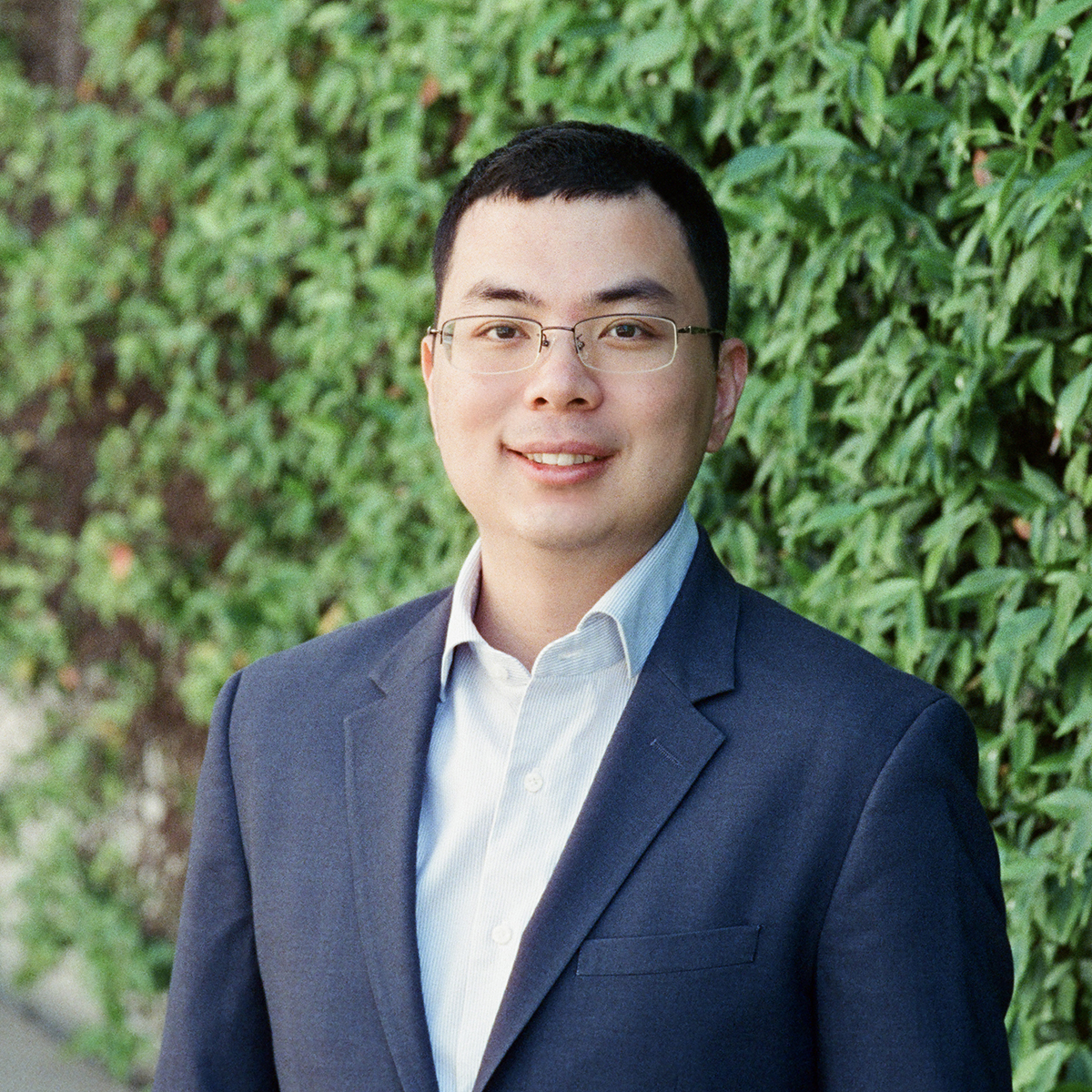
Peng Huang is an Assistant Professor of Sociology at the University of Georgia. He received his PhD in Sociology and an MS in Statistics from the University of California, Irvine, trained in the Networks, Computation, and Social Dynamics Lab. He also holds BAs in Sociology and Economics from Peking University.
Huang’s research focuses on social networks and population dynamics, adopting a relational and structural approach to explore social processes and people’s experiences therein. His first line of research examines migration and population change, covering topics including population immobility, “California Exodus,” and spatial polarization. Huang’s another research program utilizes spatially-embedded network models to understand infectious disease diffusion. He has published about the spatial pattern of local outbreak, disease transmission mechanisms, and health disparity issues.
Huang’s methodological work concentrates on developing mathematical, statistical, and computational methods to model network and population structures, dynamically and at a large scale. He has written about computational methods for valued/weighted network data under the framework of exponential-family random graph models (ERGMs), and models for longitudinal network analysis. He has also developed imputation algorithms for small area estimation.
Huang is a recipient of the Outstanding Publication Award and the Dissertation Award from the Mathematical Sociology Section of the American Sociological Association, and the Best Student Paper Award from the International Network for Social Network Analysis. His research articles have appeared in American Sociological Review, Journal of Mathematical Sociology, Proceedings of the National Academy of Sciences (PNAS), Social Networks, and Sociological Methodology.
Contact
Email: peng.huang [at] uga.edu
Google Scholar
ResearchGate
ORCID
LinkedIn
Bluesky